The transposition of the NIS 2 Directive
The transposition of NIS 2 in Austria
According to Article 41, by 17 October 2024, Member States shall adopt and publish the measures necessary to comply with the NIS 2 Directive. They shall immediately inform the Commission thereof. They shall apply those measures from 18 October 2024.
The content will be updated progressively as information will be made available.
Status of transposition of the NIS 2 Directive.
Not transposed yet. By 17 October 2024, Member States shall adopt and publish the measures necessary to comply with the NIS 2 Directive.
More information:
Status of transposition of the NIS Directive (2016/1148).
Transposed.
In German: Bundesgesetz zur Gewährleistung eines hohen Sicherheitsniveaus von Netz- und Informationssystemen (Netz- und Informationssystemsicherheitsgesetz – NISG)
Die wichtigste Maßnahme der Europäischen Cybersicherheitsstrategie der EU ist die Richtlinie (EU) 2016/1148 des Europäischen Parlaments und des Rates vom 6. Juli 2016 über Maßnahmen zur Gewährleistung eines hohen gemeinsamen Sicherheitsniveaus von Netz- und Informationssystemen in der Union ("NIS-Richtlinie"). Sie zielt darauf ab, ein höheres Sicherheitsniveau von Netz- und Informationssystemen in der ganzen EU zu erreichen.
Österreich setzt die europäische NIS-Richtlinie mit dem Bundesgesetz zur Gewährleistung eines hohen Sicherheitsniveaus von Netz- und Informationssystemen (Netz- und Informationssystemsicherheitsgesetz – NISG) um. Dabei werden Aufgaben, die sich aus der NIS-Richtlinie ergeben, bereits bestehenden Strukturen übertragen.
Translation in English (not official): Federal law to ensure a high level of security for network and information systems (Network and Information System Security Act - NISG).
The most important measure of the EU's European cybersecurity strategy is Directive (EU) 2016/1148 of the European Parliament and of the Council of July 6, 2016 on measures to ensure a high common level of security of network and information systems in the Union ("NIS Directive" ). It aims to achieve a higher level of security for network and information systems across the EU.
Austria implements the European NIS Directive with the Federal Act to Ensure a High Level of Security for Network and Information Systems (Network and Information System Security Act - NISG). Tasks resulting from the NIS directive are transferred to existing structures.
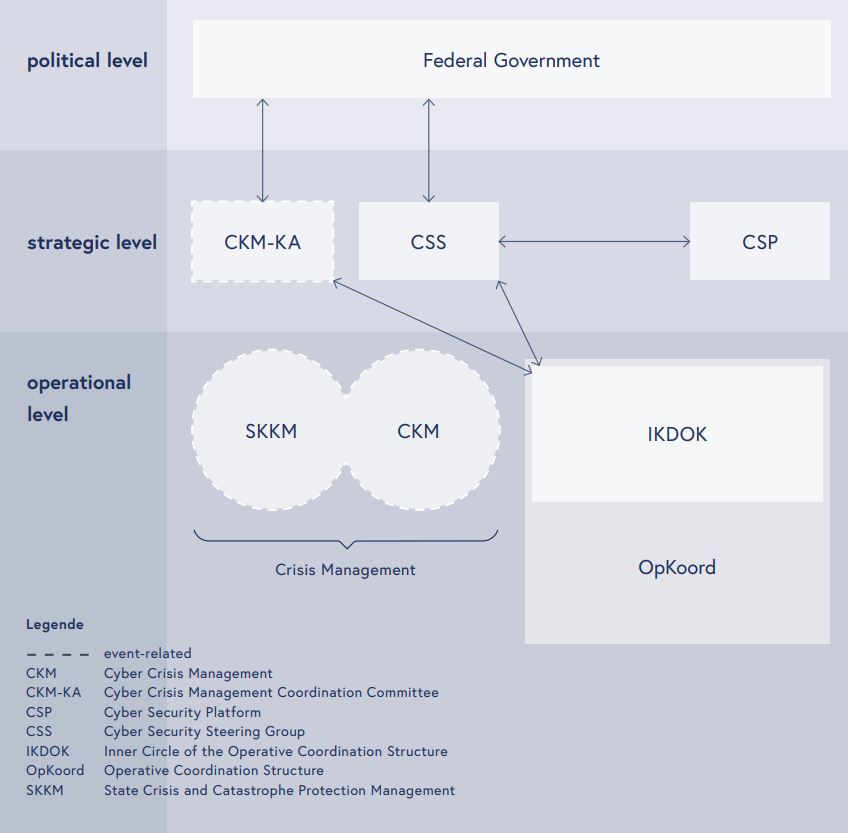
National strategy on the security of network and information systems.
The strategy is available online.
https://www.bundeskanzleramt.gv.at/en/topics/cybersecurity/strategic-nis-office.html
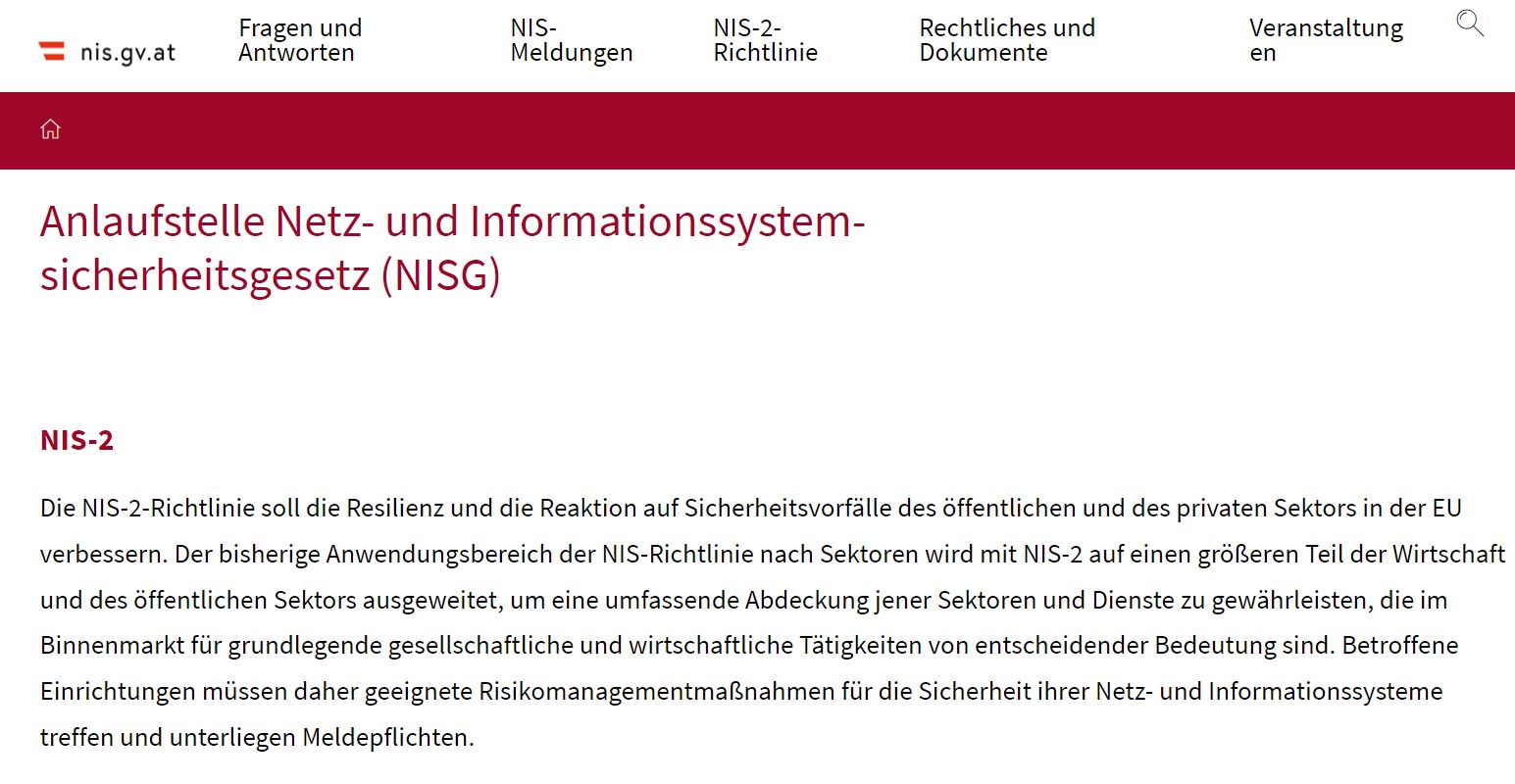
As part of Department I/8 in the Federal Chancellery of Austria, the Office for Strategic Networking and Information Systems Security is responsible for matters relating to the implementation of the legal obligations from Directive (EU) 2016/1148 concerning measures for a high common level of security in network and information systems across the Union (NIS Directive) and in Austria pursuant to the Network and Information Systems Security Act (NIS Act / German: NISG). In addition to the strategic NIS authority in the Federal Chancellery (BKA), the operative NIS authority in the Austrian Federal Ministry of the Interior performs operational tasks.
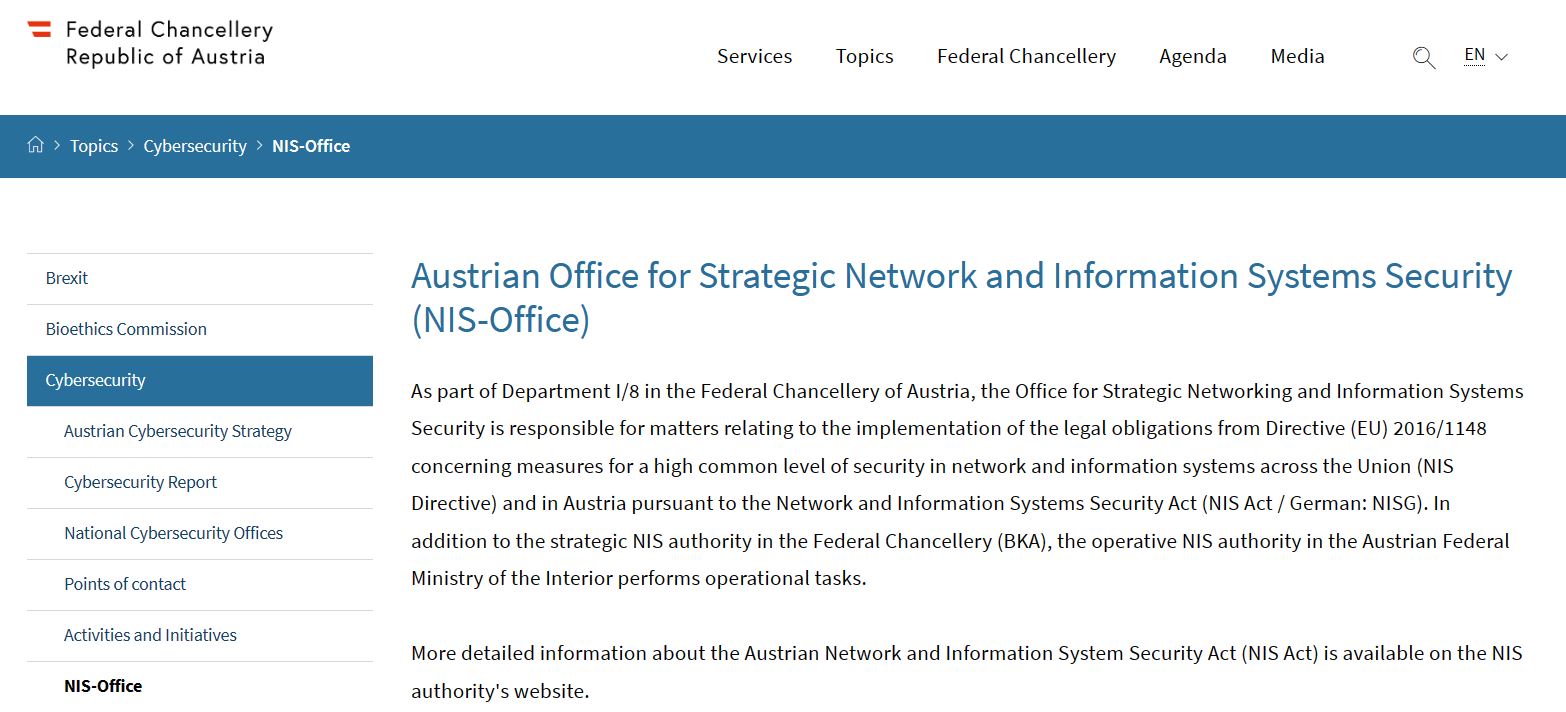
More detailed information about the Austrian Network and Information System Security Act (NIS Act) is available on the NIS authority's website.
Strategic NIS-Office
Federal Chancellery
Department I/8 – NIS-Office
Email: nis@bka.gv.at
Website: https://www.nis.gv.at (in German)
Single point of contact
National competent authority for DSPs (Digital Service Providers (DSP)
Note: Cloud computing services, online marketplacesand online search engines are in the scope of NIS.
https://www.bundeskanzleramt.gv.at/en.html
.JPG)
National competent authority for OES (Operators of Essential Services)
Same as national competent authorities for DSPs
For OES in energy sector
https://www.energy-cert.at/de/
For public administration